- Hit with your hips and use the momentum to bring yourself into the kitchen.
- Return Deep.
- You can see in this 5.0 game with Aizec Olson (Pickleball Studio’s brother) and Will that they all serve deep and return deep. So deep that it hits the line a lot of times on both returns and serves. https://www.youtube.com/watch?v=49yrY5VBQJo
- Run in fast, and split step early.
- Run in fast so you get as close to the kitchen
- Your goal and the best scenario: you get to the kitchen line and split step before they hit their shot.
- As you get to higher and higher levels where the opponent’s serve get bigger, you might not always be able to reach the kitchen before they hit the ball if your return happens to fall short.
- In those cases, you must remember to split step early. Or the hybrid drop/drive ball will fly past your feet.
- “You almost never see someone split step too early. Split step early, split step wide. The more solid your base in transition and the more still you are, the better off you will be.” – Jordan Briones.
- You want to split step early right before they hit their third shot, this way you can move to the sides or even backwards if they hit a dipping hybrid drive that dips to your feet.
- In those cases, you must remember to split step early. Or the hybrid drop/drive ball will fly past your feet.
- Run in fast so you get as close to the kitchen
Breaking Down Pro Returns
- ALW return:
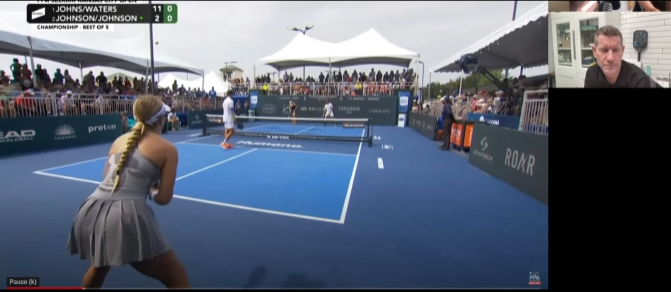
- she stands far back. As soon as the ball leaves opponent’s paddle you already know approximately where it’s going to land, and ALW already takes the first step and has body moved to her forehand or backhand. And then she moves through the return, and doesn’t swing that hard because the power came from her running through it. And returns to the guy in mixed doubles.
- Federico Staksrud:
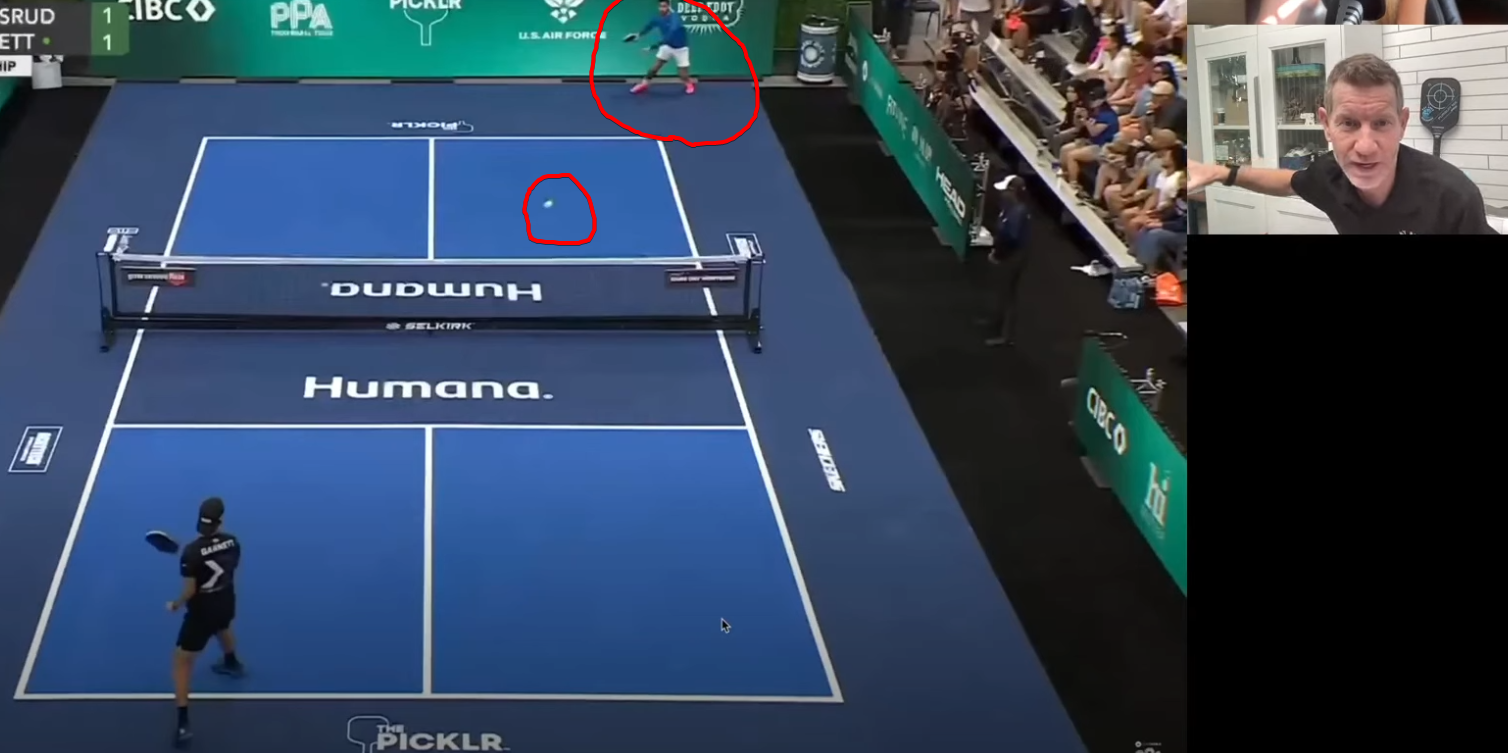
- Paddle already on the side of his forehand as soon as he sees where the ball is going to bounce, and already moving his feet to get in prime position to hit the ball.
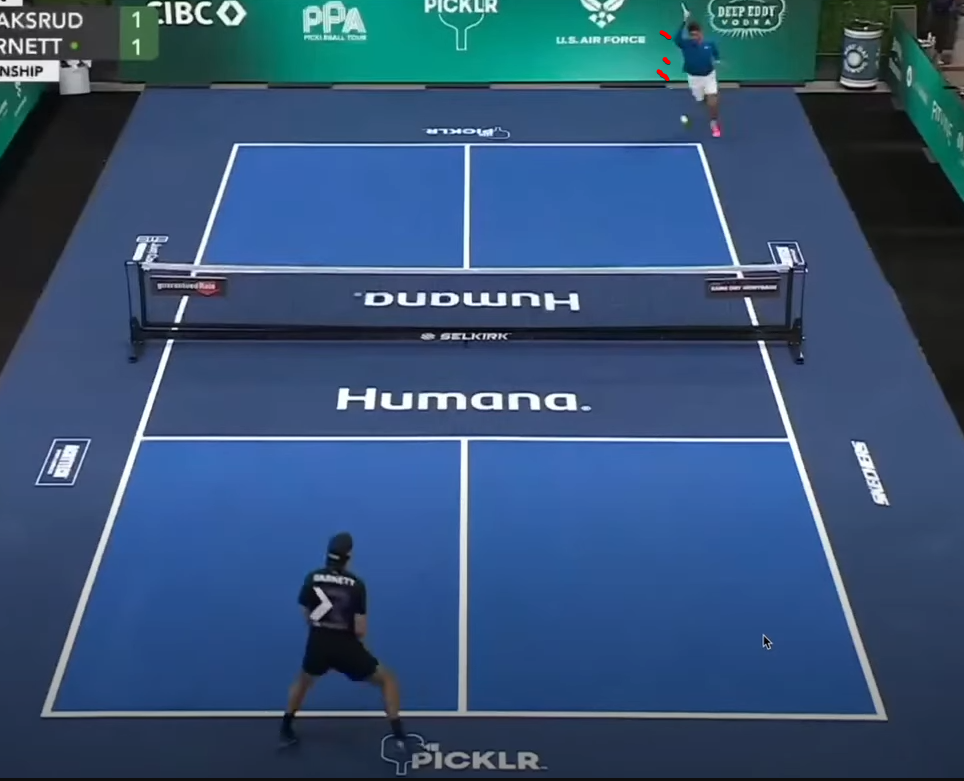
- And then he runs through the ball.
- Jaume Martinez Vich – 2 Handed Backhand Return:
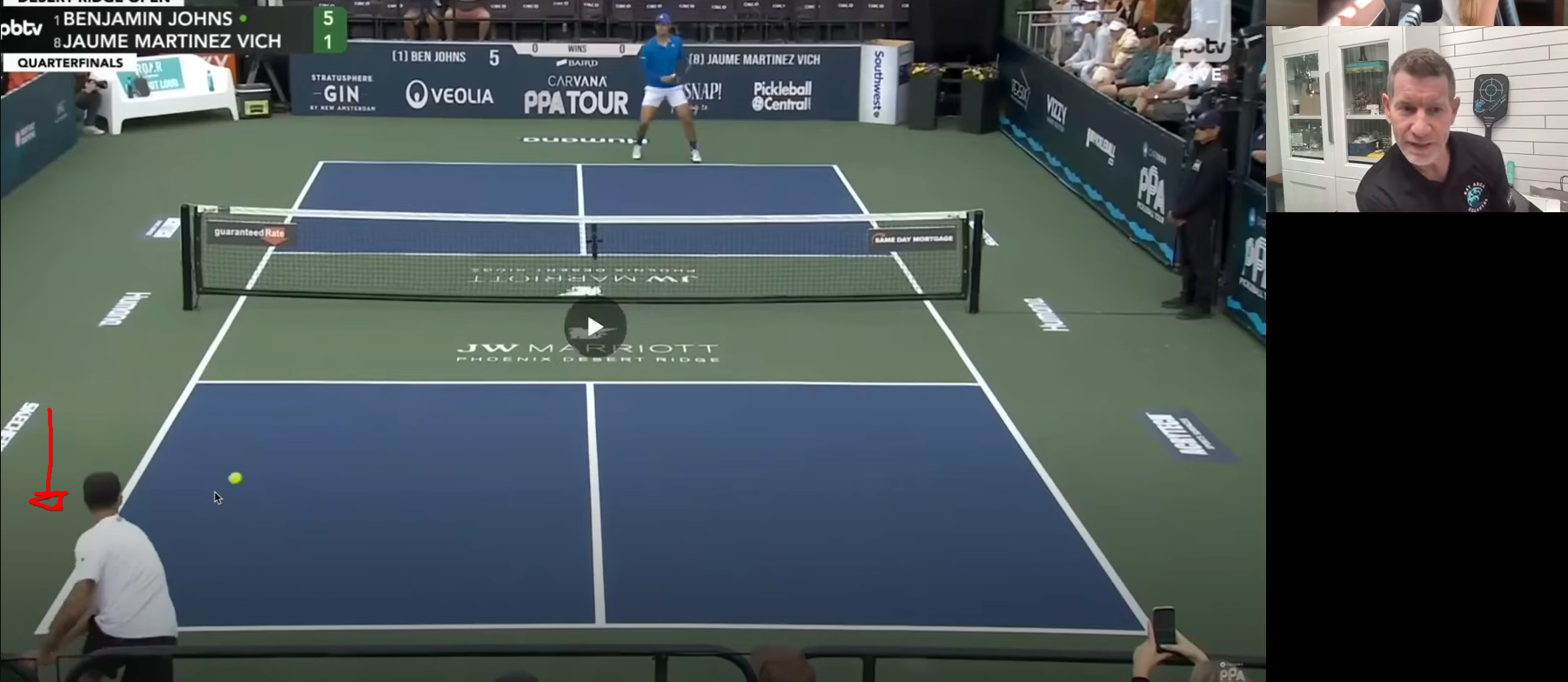
- His paddle goes down and his body gets down with his paddle.
- Jaume dips his shoulder on his returns, he said to Jilly B “try and hit it with your shoulder”.
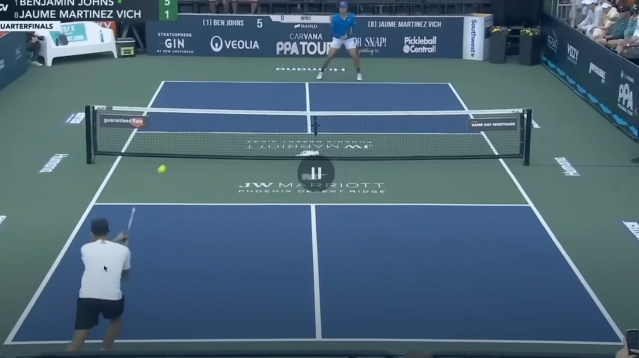
- He also moves his body and hip into the return. He times it. So his bodyweight is swung through the ball. He isn’t swinging his arm very hard, it’s all his body.
Another good video on breaking down pro returns
Against Big Serves:
- If you are missing, give yourself more margin for error: feel free to return floaty and high, as long as it’s deep.
- Common Question: “I feel like my returns are popping up kinda high, is that bad?”
- ”No, it’s not bad. A high return is totally fine, in some cases, better than a flat return. The only problem with a high return is if they are short. But then again, all short returns are bad.
- “High return is fine. If they want to drive from the baseline at 22+ feet out, let them. That’s not a high percentage shot. Better to have 2 at the net, instead of a low return and only one of you at the net.” – Pro Player and Coach Scott Crandle
- Common Question: “I feel like my returns are popping up kinda high, is that bad?”
- Also return Crosscourt rather than to the middle if you are missing long.
- When dealing with Bangers that serve big, your return short, they catch you with their drive as you are running up. Instead, return high cross court to the corner and pull them wide. That ball will be in the air for a much longer time going crosscourt.
- Make sure you tell your partner cover to line (they already are at kitchen so it’s an advantage), and you cover middle. At least this way, you have enough time to get to the kitchen. And force them to hit that slower harder, passing shot crosscourt from out wide.
- I am glad James Ignatowitch had the same thought I had. Better to sacrifice that, then be caught in transition zone, hitting short to the middle if they are good at running up and drive.
Priority Checklist
Must-have
- Return deep. That is #1 priority.
- The deeper your return, the more additional drops and resets they have to hit to get to the kitchen.
- Lesser known fact: The deeper your ball lands, the more energy is lost and lower the bounce will be. Making it harder for them to drive it even if your return is a little lofty.
- It’s in the budget to miss the return deep. If you hit a short/soft return, now you are stuck back trying to drop and get to the kitchen.
- The deeper your return, the more additional drops and resets they have to hit to get to the kitchen.
- Positioning at the Start
- Take one big step back away from the baseline.
- If they have a huge serve, take a step and a half.
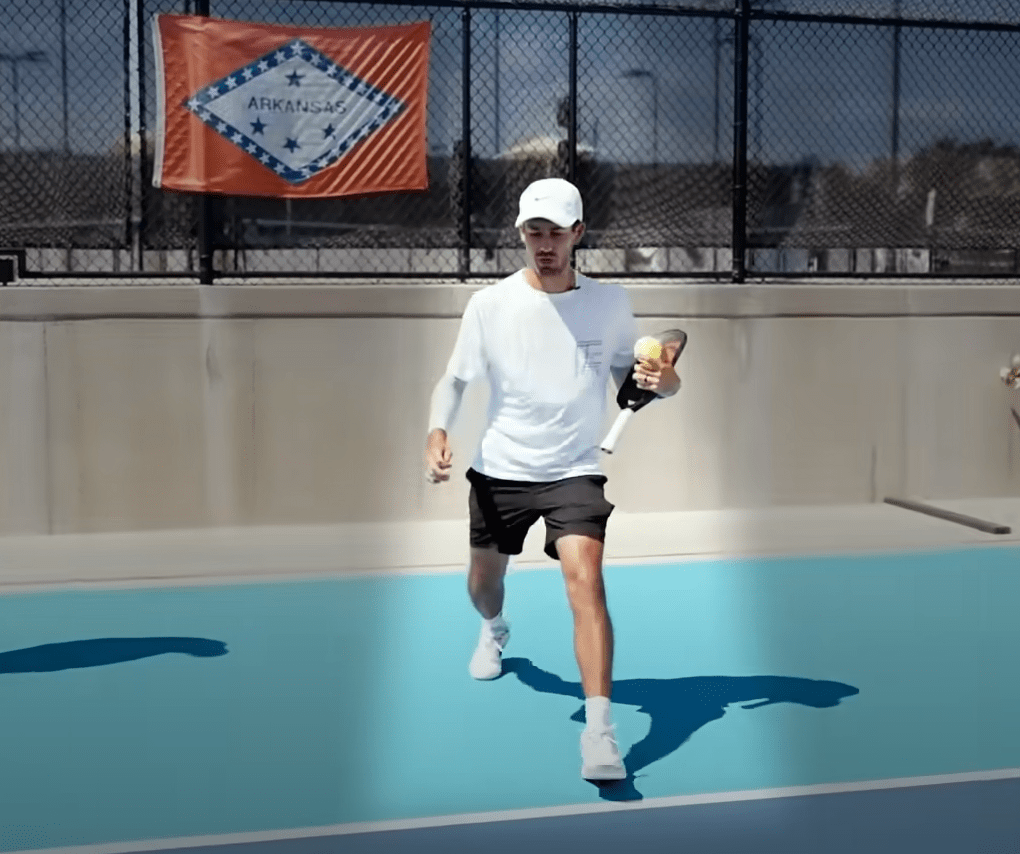
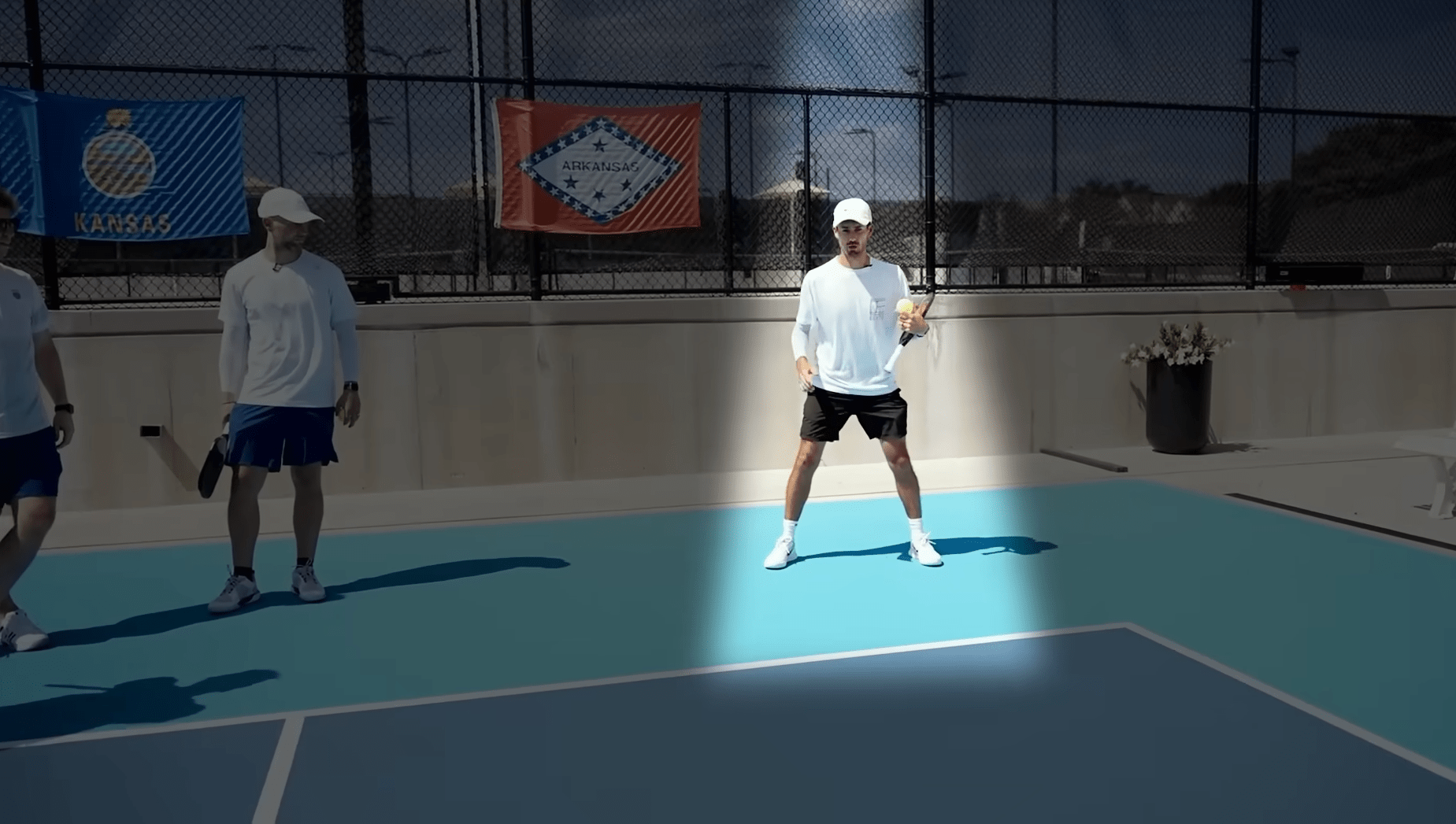
- And if you favor your forehand, take one step over towards your backhand so you have more room for forehand.
- Take one big step back away from the baseline.
- Get low and stay low: bend knees, feet wider than shoulder width apart.
- Don’t stand up when moving through the return because it’ll make the ball pop up, stay low throughout the return. Imagine a roof on top of your head as you are running through the ball. “At the pro level there is almost never popping up [body] on the returns” – https://youtu.be/C5A10o6By3k?t=877
- The pickleball ball also generally doesn’t bounce up very high, especially on 65 mph fast serves so getting low really helps.
- Footwork: React to the serve, as soon as the ball leaves their paddle, start moving so you can get your .
- Just like you would on a tennis drive. Get in position behind the ball with your waist turned so you can hit the ball in your power pocket.
- Run through the return. Stand further back from the line so you have more momentum.
- DO NOT “STOP OR SPLIT STEP”. RUN Through the shot. If your coach tells you different, it’s bogus, malarky. – Zane Navartil
- And then take 2-3 big steps first and once you get close to the net, take smaller chop steps. Run to the net, if you are slow, you will be caught in the transition zone.
- Alshon explains it here: https://youtu.be/mZY10rBpsyY?t=2599
- Use your hip and shoulder, not just your arm.
- Hold your arm in follow through. Keep it up long after the ball leaves the paddle.
- You see pros do it all the time. It works surprisingly well for consistency.
- Default: hit it as flat as you can:
- No topspin or backspin. Maybe a little topspin to get it over the net.
- Don’t hit it too hard though, the harder you hit, the less time you have to get to the kitchen.
- It’s okay to hit a floating return but it has to land deep, if it lands short, you are in trouble.
- You can mix it up to mess up their thirds, but
- No topspin or backspin. Maybe a little topspin to get it over the net.
- Against deep/fast serves: Short compact swing.
- Don’t do big swing wind-ups which will mess up your timing against fast serves.
- Against soft, shorter serves: feel free to swing away.
- Within reason of course. You don’t want to swing so big you lose track of your arm and paddle and miss the ball. https://www.youtube.com/watch?v=hJJ5xTdbe9g
- Buy yourself enough time with your return so you make it to the kitchen.
- Hit the ball crosscourt at the middle of the server’s box at server’s feet (typically more towards the backhand of the server).
- Crosscourt has larger margin for error.
- Crosscourt buys you more time to run to kitchen.
- Backhand of the server so they have to run around to hit a forehand drive.
- The harder the server serves, the more effective this is.
- If they don’t back up far after serving = a deep return right at their feet will force them to move backwards.
- That’ll make them have to hit 1-2 extra drops to even get to the kitchen.
- And if they have a big scary drive off of returns, they won’t be able to hit a hard drive even if you hit a high floaty soft return. Because they are on their back foot. This is why they say depth is more important than height.
- Example shown here where Zane returns deep to the foot of Dekel Bar who steps in on his big serve:
- Another example here:
- Here Dekel Bar who has one of the biggest and fastest serves goes against Dylan Frazier.
- Frazier stands as far back as possible and loops the ball very high up crosscourt to give himself the most margin of error against a big heavy serve.
- Because the return is deep, Dekel Bar has to shift his feet and can’t get a proper drive off, instead he lifts the ball too high in his half drive/half drop.
- Example shown here where Zane returns deep to the foot of Dekel Bar who steps in on his big serve:
- Crosscourt has larger margin for error.
- Return Target Priority:
- If one player is significantly worse at 3rds and getting to the kitchen line, return to that player.
- If both players are about the same at 3rds, return to whoever is better at poaching and crashing the kitchen.
- This is to keep them back and nullify that threat.
- This is why in mixed doubles, they return to the men almost always.
Advanced
- Hit hard returners that are deep that make it hard for opponent to come to the kitchen.
- Makes it harder for people to hit their 3rd shot drive / drop perfect. And you can keep them back longer because their initial 3rd is high.
- “A year ago I used to just push my returners in, now I hit harder and harder” – James Ignatowich
- “There is always something I’m trying to do with the shot. Whether it’s getting it to bounce in the middle [between the two players] or adding topspin”. – James https://youtu.be/xQgwTNcvoIE?t=424
- Makes it harder for people to hit their 3rd shot drive / drop perfect. And you can keep them back longer because their initial 3rd is high.
- Sprint to the kitchen.
- The faster and harder your return, the faster you have to sprint. Because the less time you have to get to the kitchen.
- If you hit and they hit it back before you even get to the kitchen line, either learn to sprint faster or slow down your swing (you can swing slower and keep the ball on the paddle for longer. You can still return it pretty hard with a slow short swing if your power comes from running through the return).
- At the pro level, if you can hit the return hard without missing, do so because it makes the opponent’s thirds harder. https://youtu.be/iPYd3ReUrds?si=gKVbS7EJYaeWwTvk
- The faster and harder your return, the faster you have to sprint. Because the less time you have to get to the kitchen.
- Hit the ball on the rise
- So you are closer to the kitchen on contact which means you have less distance you need to run. Whereas if you hit a big serve while it’s falling, you would be a lot further back off the court.
- These guys also agree: https://youtu.be/gDgj050syFM?t=438
- It also gives you more power on your drive return.
- Stay further back from baseline and then run up and meet the ball as it rises.
- So you are closer to the kitchen on contact which means you have less distance you need to run. Whereas if you hit a big serve while it’s falling, you would be a lot further back off the court.
- When you are unwinding the stack: return and move in, but don’t move laterrally as you return, only forward.
- Then after the ball already leaves the paddle, then move laterally to unwind the stack.
Drill Progression:
- Serve & Return
- Your partner practices serving hard at the line at you with as much spin as possible. Return the ball with pace and try to get the kitchen asap before the ball bounces and rises up.
- If they serve it out, that is fine, just redo it.
- Advanced:
- Have them vary up the serve:
- to your backhand.
- serve short and long.
- wide on each side.
- vary the spin
- Have them vary up the serve:
- Advanced:
- Vary your returns
- Return it deep at the line in the middle.
- Return it deep to either side.
- Return it short.
- Vary your returns
- Your partner practices serving hard at the line at you with as much spin as possible. Return the ball with pace and try to get the kitchen asap before the ball bounces and rises up.
- Skinny singles.
- Self explanatory – see skinny singles drill article here.
- 3 man drill: 1 v 1 v 1
- One person serving, one person at the kitchen, one person returning.