Intro
- Lob over the opponent’s non-dominant shoulder. People have a shorter and weaker backhand overheads.
- If you see that as you are about to dink, opponent are over leaning into the kitchen or trying to do an Ernie, you should lob them. Because the won’t be able to stand up straight in time to get a clean overhead smash off.
- Disguise your lob like a topspin dink.
- Don’t just use the lob as a bail-out to get out of a point. Use it strategically as an offensive tool.

- You want a topspin lob so it goes higher over the opponent and then dips down after.
- Source and explanation:
- The key to lob is a controlled flick motion up but not fast.
- If you flick it too fast, it’ll go out. Instead you want it to be around 30-40% speed of your regular speed-up. Basically you want the ball to dwell on your paddle for longer so you can lob it over.
- You don’t want to flick too slow though because then arc of the ball would be too low and they’ll hit with an overhead.
- https://youtu.be/Tmi_fAaOOI8?t=18
Alyce Jones shows How To Lob
- You don’t have to lob perfectly and hit the baseline.
- As long as the opponent is off balanced and stepping back at the back third of the court, it’s hard for them to get a smash in that you can’t defend.
- Body: Stay set leaning forward.
- Just like with drives, don’t stand up, your chest shouldn’t move and face up.
- You are lifting the ball up with your legs not your chest.
- This way you are using topspin to keep the ball in rather than just popping the ball up.
- Lobbing against the wind is great, you just need to lob it as high as possible and the wind will blow it back in the court anywhere.
- Opponent’s will go “where did the ball go?”
- You can even lob from mid court transition zone.
Example of Lob Used In Game
- If there is a dink that you can attack with a flick speed-up, that means you have enough time to lob it over them as a possible option.
- Lob on a high enough dead ball from opponent, even off the bounce, that you can threaten speed-up and crosscourt topspin dink. And you lob it over because they can’t cover everything.
- The video uses forehand as example, but that’s because people don’t have a good backhand crosscourt dink or backhand speed up so they can’t threaten to speed-up from the backhand. IF you have a backhand speed-up, a backhand lob is even more effective and more of a threat than a forehand lob because you don’t leave a middle gap so you also threaten middle topspin dink as well.
- My note: if they do an aggressive dink and are expecting a pop up, thus are leaning in, lobbing off the bounce can work as well to bail you out. Turns a disadvantaged defensive situation into an offensive one.
Gabe Tardio Lob
If you watch Gabe’s lobs, he always winds it up like a he is about to do a speed-up, and then he lobs the ball into the air.
Another pro player to watch is Callen Dawson. He lobs frequently, he even short-hop lobs. He practically invented the offensive lob.
Priority Checklist:
High Priority
- Lob over their backhand side.
- Wind-up and then lob
- applies top spin so it dips down fast.
- forces opponent to lean in for the speed-up or speed-down.
- It also forces you to only lob on viable shots. Basically if you don’t have enough time to wind-up, you shouldn’t lob the ball.
- When to lob:
- If opponent are over leaning in, lob.
- If they are looking to Ernie, lob.
- If they are recovering without their feet set, lob.
- And partner is too far away to cover it, lob.
- Depending on position, you can either lob over the partner who is in-position’s backhand (because their other partner can’t cover it).
- Or lob over the out of position partner’s forehand
- And partner is too far away to cover it, lob.
- If they don’t have a great overhead, lob.
- If they don’t have a great backhand overhand, lob over their backhand side.
- Disguise your shot like a dink.
- It’s a dink with a bigger follow through upwards.
- Don’t open up the paddle too early otherwise they’ll see it coming.
- Don’t use the lob emotionally like when it’s 9-9 and you want to bail out of a dink rally.
- Instead use the lob strategically when you see the opportunity.
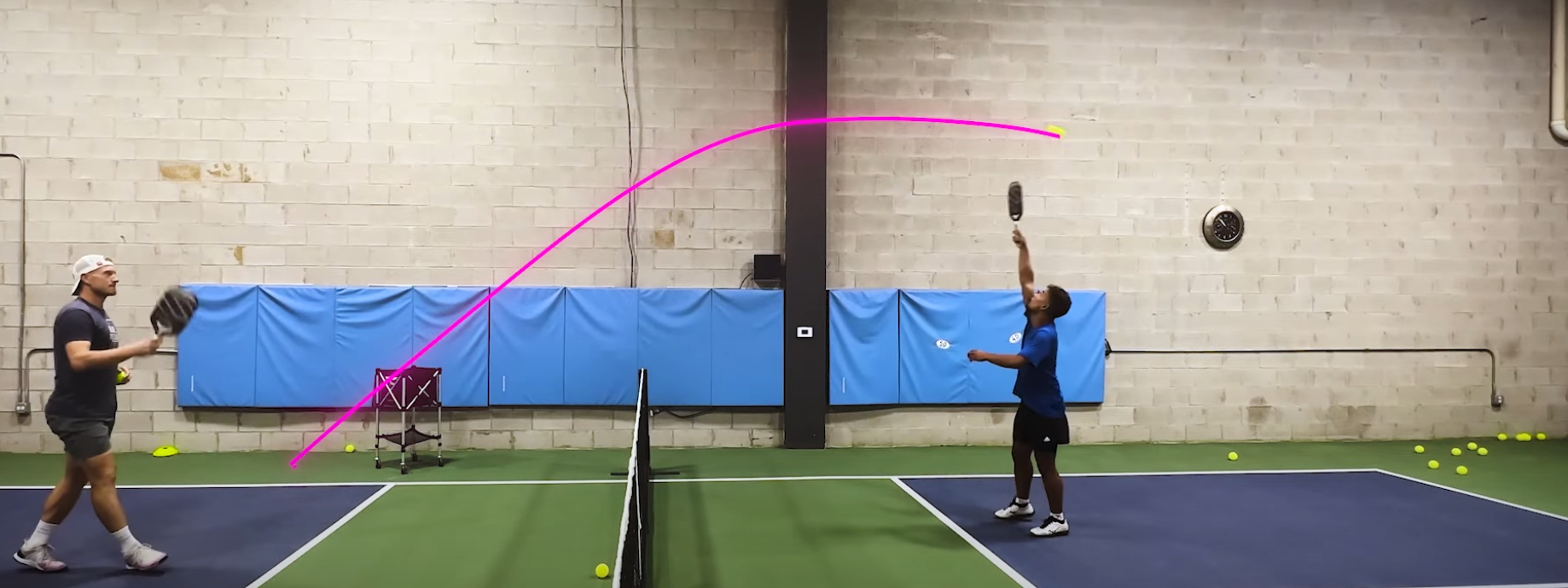
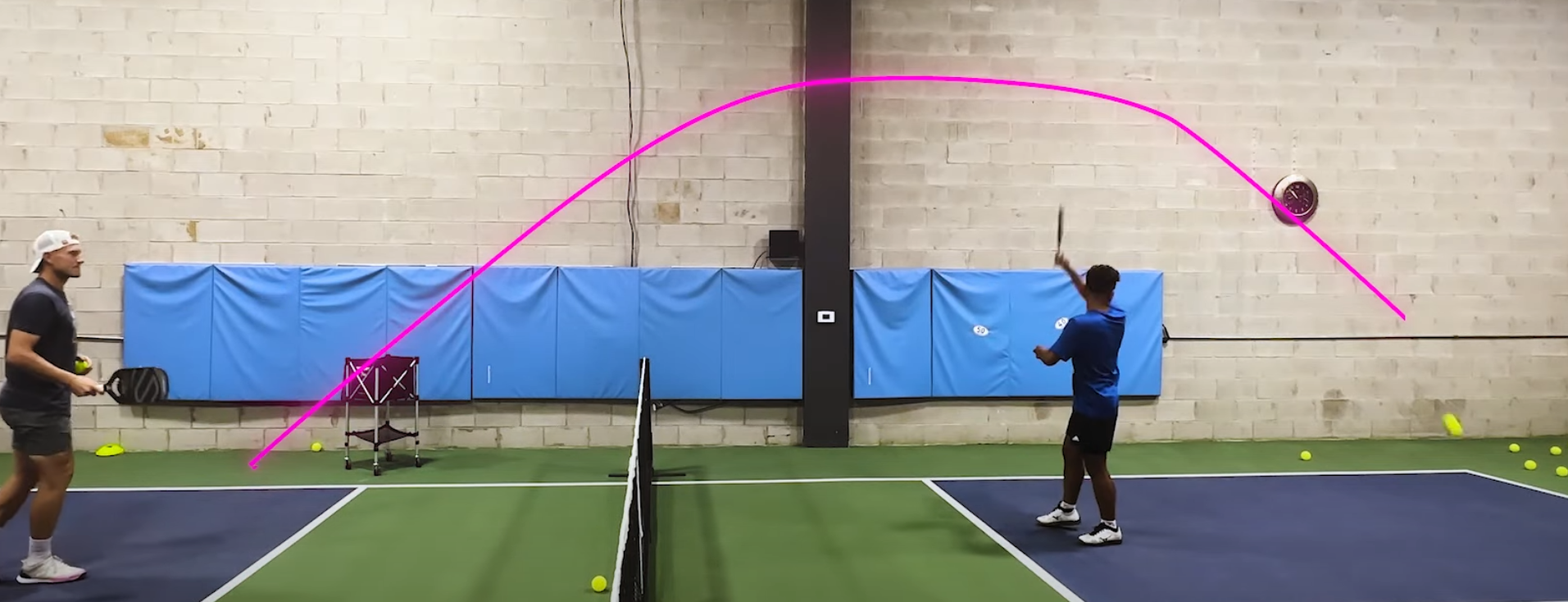
- Get it Over Opponent’s Arm. Higher is more important than deeper.
- The closer you are to the net, the closer the apex of arc will be to your opponent, which means you won’t need to lob it as high.
- The further back you are, the easier for your opponent to hit it at the apex of the arc, because the apex of the arc will be further back and closer to you.
- source: https://youtu.be/3lqzrl8pbWk?t=298
Lower priority
- The amount of topspin.
- “I would definitely say focus a little less on the top spin to start and then as you get pretty consistent you can try to implement the top spin back. Even when you do, it shouldn’t be that much spin, mostly getting the ball up!” – Catherine Parenteau
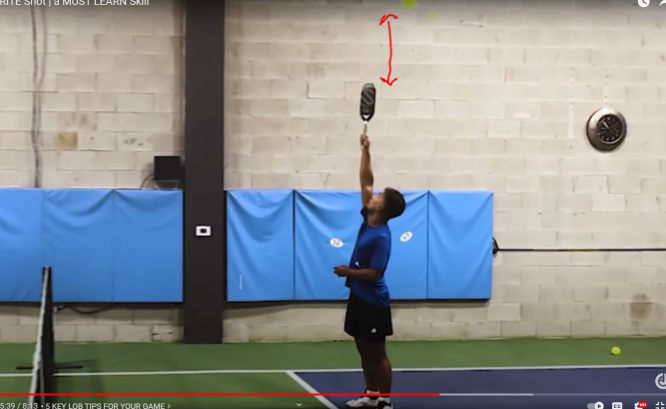
- Don’t lob it too high, just two feet higher than opponent’s reach.
- This way it drops down faster and is harder for them to get to.
- This way it drops down faster and is harder for them to get to.
- Situational awareness: Wind
- If you are playing against the wind, you can use lob as your main strategy. Because it’s very easy to lob into the wind. You can lob high apex, and the wind will keep the ball in.
- If you are playing with the wind, you probably shouldn’t lob because the wind takes it out the court or into opponent’s paddle early before it reaches the apex.
- Situational awareness: Opponent’s kitchen playstyle.
- If opponent likes to reach into the kitchen and speed-up out of the air, they are easier to lob.
- If opponent likes to play a step or two from the kitchen and play defensive, they will be tougher to lob.
- Situational awareness: Opponent’s height, weight, and speed.
- Some people say to not do it off the bounce. Yes it’s better to do it out of the air (less time and space for opponent to react), but you can do it off the bounce. Pros do it off the bounce all the time.
Drill Progression
- Solo Drills:
- Bounce the ball on your paddle.
- keep the ball on your paddle, but instead of regular height, lob it 10 feet in the air. And then keep your feet on the ground in the same place. If you move your feet in order to get the paddle underneath the ball, you lose. This is to develop your touch and feel for the ball.
- Goal: Do it until you are able to get to 20 in a roll. And then move to next drill.
- Always come back to this drill and try to see if you can get to 100+ in a roll. This drill teaches you to hit your paddle sweet spot on the lob and gives you great touch. Because if you have bad touch, the lob will land away from you.
- keep the ball on your paddle, but instead of regular height, lob it 10 feet in the air. And then keep your feet on the ground in the same place. If you move your feet in order to get the paddle underneath the ball, you lose. This is to develop your touch and feel for the ball.
- Lob on the court:
- Bounce a ball to yourself, and the lob it down the line and crosscourt over invisible opponent’s backhand. Aim to land it on the baseline 9 out of 10 times.
- Bounce the ball on your paddle.
- Two Person Drill:
- Like a dinking drill, except one person is allowed to lob. The other person dinks and practices their overhead smashes.
- 3 Person Drill
- The player on the 1 side lobs, the two other player across the net overhead smashes and dinks.